European wind & cleantech
Europe quietly built the world's wind industry. Denmark anchors it: Vestas is the world's largest wind turbine maker, Ørsted dominates offshore wind, Henrik Stiesdal (the engineer who pioneered the first commercial wind turbine in the late 1970s) is now building modular wind and pyrolysis carbon-removal. Around the Danish core sits an Iberian renewables giant (Iberdrola), a Portuguese leader (EDP Renováveis), a Norwegian state utility (Statkraft), a German integrated player (RWE), and a French scaleup (Voltalia).
This is the only major energy category where Europe genuinely owns the global lead. The Chinese turbine makers (Goldwind, Mingyang) are catching up on volume, but the engineering depth and the supply chain still live in the EU.
Below: European wind and cleantech companies worth knowing. The strategic-sovereignty argument writes itself: Europe doesn't import this category, it exports it.
Vestas
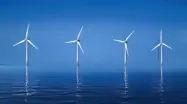
Known for: Inventing modern utility-scale wind turbines (the company started in wind in 1979 after pivoting from steel-frame houses). The world's largest wind-turbine manufacturer and the structural reason Europe's wind grid isn't Chinese. Arguably the most strategically important Danish company outside Novo Nordisk.
Employees: ~30,000
Siemens Gamesa
Known for: The other European turbine giant alongside Vestas, formed from the 2017 merger of Siemens Wind Power (Germany) and Gamesa (Spain). Recent onshore-platform quality issues are genuine and ongoing, but the engineering depth and offshore order book are too large to write off.
Employees: ~26,000
Ørsted
Known for: World leader in offshore wind farms. Formerly Dong Energy (Danish Oil and Natural Gas), the company pivoted entirely out of fossil fuels by 2017 and rebranded after the Danish physicist who discovered electromagnetism. The clearest energy-transition story in European industry, from oil and gas to all offshore wind in a decade.
Employees: ~8,000
Iberdrola
Known for: Europe's biggest renewable utility by market cap. The company spun out fossil generation early and bet on wind and solar before it was popular, and it is one of the few European utilities that competes globally on renewable-developer terms with the American and Chinese giants.
Employees: ~42,000
Statkraft
Known for: Europe's largest renewable generator, almost entirely hydro plus growing wind. Fully Norwegian-state-owned by design, applying the Norwegian sovereign-wealth model to renewable power generation.
Employees: ~6,000
RWE
Known for: Germany's energy transition in one company. A mixed fossil legacy remains, with some coal still phasing out by 2030, but the new RWE is fundamentally a renewables business, with a particularly strong offshore-wind position from the 2020 asset swap with E.ON.
Employees: ~20,000
Vattenfall
Known for: A Swedish state-owned utility with serious renewable credentials and a major European offshore-wind developer. The Swedish hydroelectric base is its structural strength, giving Vattenfall cleaner generation than almost any other European national utility.
Employees: ~21,000
Equinor
Known for: Norway's energy-sovereignty anchor and an honest sustainability case study. Still primarily a fossil-fuel major, it is also one of the larger offshore-wind developers, and it forms the structural backbone of the Norwegian economy.
Employees: ~22,000
Topsoe
Known for: The industrial-decarbonisation anchor of Danish heavy chemistry. Topsoe's SOEC electrolysers are among the most efficient green-hydrogen technologies in commercial development, and they are strategically critical for the European energy transition. The Temasek minority stake is the only non-Danish ownership note.
Employees: ~2,400
Yara International
Known for: The world's largest mineral-fertiliser producer and one of the most strategically important industrial-decarbonisation programmes in Europe, through green ammonia and green hydrogen for shipping fuel and fertiliser.
Employees: ~17,000
Norsk Hydro
Known for: One of the world's largest aluminium producers, backed by Norwegian hydropower, which means Hydro's aluminium carries materially lower embedded carbon than most competitors. The clean-aluminium story is structurally real.
Employees: ~32,000
KK Wind Solutions
Known for: The quiet electronics tier underneath the European wind industry. If a turbine is spinning anywhere in the world, KK Wind Solutions gear may well be inside it, a Danish hidden champion most people outside the industry never hear of.
Employees: ~1,000
Stiesdal
Known for: Henrik Stiesdal essentially invented modern commercial wind, building one of the first commercial wind turbines in 1978 and later serving as CTO of Bonus and Siemens Wind. His current company is one of the most interesting cleantech ventures in Europe, combining modular wind with pyrolysis carbon-removal under one roof.
European Energy
Known for: The most interesting Danish power-to-X play. The Kassø e-methanol facility, the largest in the world at commissioning, supplies Maersk for shipping decarbonisation, one of the most consequential cleantech bets in maritime fuel.
Employees: ~500
Hexicon
Known for: A Swedish floating-wind technology specialist. Floating offshore is the technology that opens deep-water sites, a category where Europe (the UK, France, Norway, Sweden and Spain) genuinely leads the world.
Better Energy
Known for: Solar in Denmark sounds counterintuitive, yet Better Energy proves the economics work. A strong corporate power-purchase-agreement model aimed at European industrials that need verifiable green power.
Employees: ~250

Scatec
Known for: A Norwegian solar developer punching well above the country's solar-irradiance grade. Particularly strong in emerging markets where Western solar developers often do not operate. Listed and independent.
Employees: ~700
Voltalia
Known for: The Mulliez family's renewable-energy bet. Smaller than Iberdrola but with a more entrepreneurial culture, and the fastest-growing French renewables operator.
Employees: ~1,800
EDP Renováveis
Known for: The under-rated Portuguese renewable champion. The EDP Group has been all-in on renewables for over a decade, earlier than most peers, and the spin-off EDP Renováveis is now one of Europe's largest pure-play renewable operators.
Employees: ~5,000
You might also like
European Solar Panel Manufacturers: A Glimmer of Hope
Despite the dominance of imported panels, Europe is home to several notable solar panel manufacturers striving to revitalize the industry.
European AI startups
Open-weight LLMs from Paris, unicorns from Stockholm: the European AI companies already shipping at global scale.