Europe’s Top 10 Beer Brands: Proudly Brewed in Europe
We love beer. And in Europe, it’s more than just a drink—it’s a way of life. From crisp pilsners in Prague to smooth stouts in Dublin, every sip carries the legacy of centuries-old brewing traditions.
The breweries on this list remain mostly European, keeping jobs, ingredients, and craftsmanship close to home. These brands don’t just brew beer—they shape culture, fuel economies, and bring people together in pubs, beer gardens, and festivals across the continent.
So whether you're clinking glasses over a Weißbier in a Munich Biergarten or enjoying a cold Estrella by the coast, here’s to the breweries that keep Europe’s beer scene thriving. 🍻

Heineken
Ownership: Heineken N.V. (Netherlands), breweries in 70+ countries
Beer brands: Heineken, Amstel, Tiger, Cruzcampo, Birra Moretti, Żywiec, Desperados
Employees (Europe): ~36,000
Production: ~240M hl
Key markets: Netherlands, France, UK, Spain, Mexico, Brazil
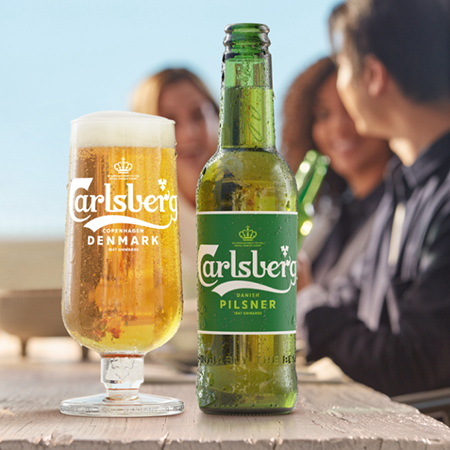
Carlsberg
Ownership: Carlsberg Group (Denmark), breweries in Europe & Asia
Beer brands: Carlsberg, Tuborg, Kronenbourg 1664, Baltika, Grimbergen
Employees (Europe): ~17,000
Production: ~101M hl
Key markets: Denmark, France, UK, China, India

Guinness
Ownership: Diageo plc (UK), breweries in Ireland & Africa
Beer brands: Guinness, Hop House 13, Kilkenny, Tusker (Kenya), Serengeti (Tanzania)
Employees (Europe): ~5,000
Production: ~25M hl
Key markets: Ireland, UK, Nigeria, US, Africa
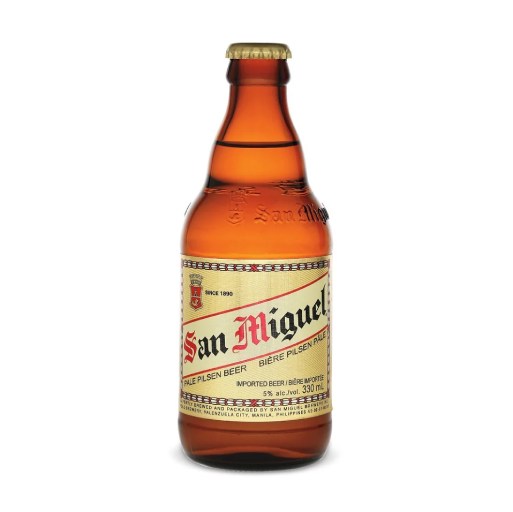
Mahou San Miguel
Ownership: Private (Herraiz/Gallardo families, Spain), breweries in Spain & US
Beer brands: Mahou, San Miguel, Alhambra, Founders (US)
Employees (Europe): ~4,000
Production: ~20M hl
Key markets: Spain, UK, Latin America
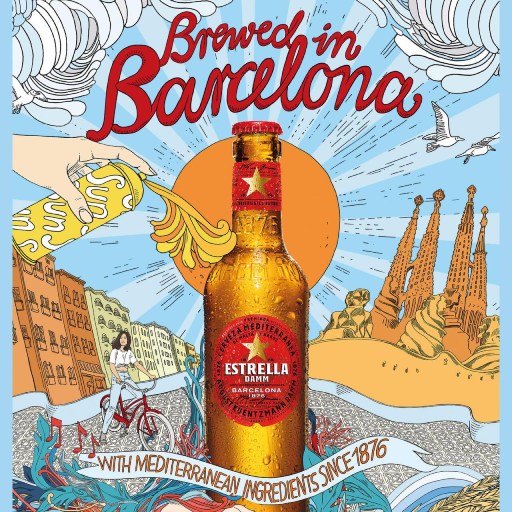
Damm
Ownership: Private (Carceller family, Spain & Dr. Oetker, Germany), breweries in Spain & UK
Beer brands: Estrella Damm, Voll-Damm, Bock Damm
Employees (Europe): ~5,700
Production: ~12M hl
Key markets: Spain, France, Italy, UK, Australia
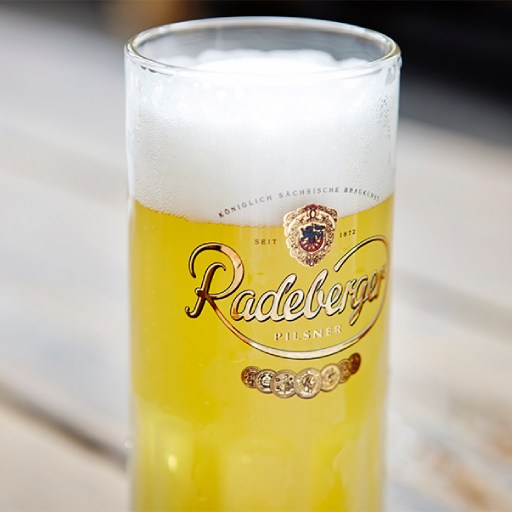
Radeberger
Ownership: Dr. Oetker KG (Germany), breweries in Germany
Beer brands: Radeberger, Jever, Schöfferhofer, Clausthaler (non-alcoholic)
Employees (Europe): ~5,600
Production: ~10.8M hl
Key markets: Germany, US, Europe
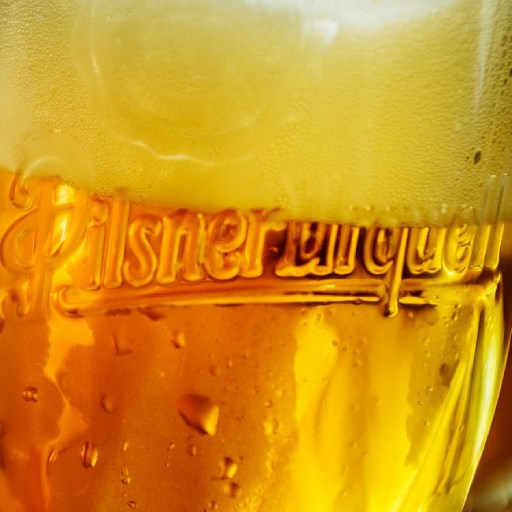
Pilsner Urquell
Ownership: Asahi Group (Japan), produced in Czechia
Beer brands: Pilsner Urquell, Kozel, Gambrinus, Radegast
Employees (Europe): ~2,200 (all in Czechia)
Production: ~11M hl
Key markets: Czechia, Slovakia, Germany, UK, South Korea
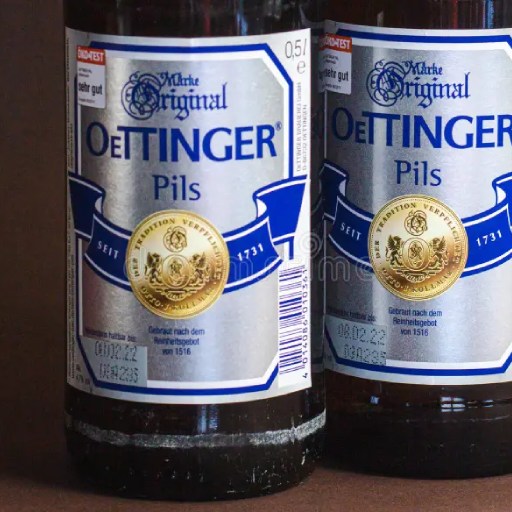
Oettinger
Ownership: Private (German owners), breweries in Germany
Beer brands: Oettinger Pils, Oettinger Export, Oettinger Radler
Employees (Europe): ~1,100
Production: ~7.5M hl
Key markets: Germany, Eastern Europe, Australia<
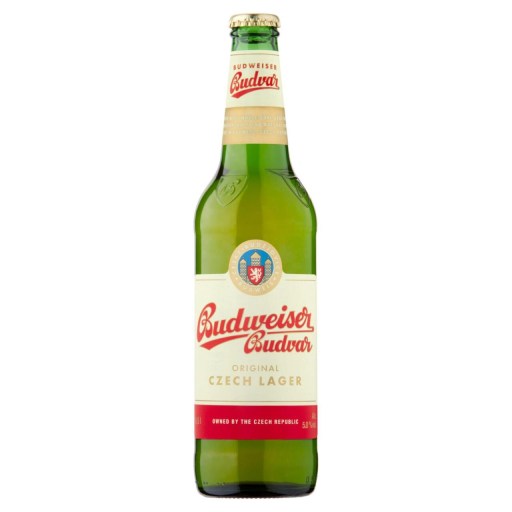
Budweiser Budvar
Ownership: Czech state-owned, breweries in Czechia
Beer brands: Budweiser Budvar (Czechvar outside EU)
Employees (Europe): ~650 (all in Czechia)
Production: ~1.78M hl
Key markets: Czechia, Germany, UK, Slovakia, Austria
Anadolu
Estrella Galicia
Ownership: Family-owned through five generations of the Rivera family (currently led by Ignacio Rivera)
Pricing: 330ml bottles ~€1.20-€2 in supermarkets. Tap pours €2.50-€4.
Known for: A Coruña-based, founded 1906 as Hijos de Rivera. Estrella Galicia pilsner, plus a serious craft and specialty range (1906 Reserva Especial, Black Coupage). Sponsors Fórmula 1 (Aston Martin) and MotoGP. The credible Spanish lager choice — family-owned, not part of AB InBev or Heineken, with a serious specialty range that the mass-market Spanish lagers (Mahou-owned and Heineken-owned) don't match. Galician regional identity is a real asset.
https://estrellagalicia.es
Mack Bryggeri
Ownership: family-owned (Mack family, 4th generation)
Pricing: Bottles ~€3-€5 in Norwegian supermarkets (Norwegian alcohol taxes apply).
Known for: Tromsø-based, founded 1877 by Ludwig Mack. World's northernmost brewery (69°N). Independent and . Mack Pilsner, Bayer, Nordlys (Northern Lights) — the classic Arctic Circle lager portfolio. Norwegian Arctic-Circle brewery that's stayed family-owned and independent — increasingly rare in European brewing. Worth choosing over the Carlsberg-owned Norwegian beer brands (Ringnes etc.) for sovereignty.
https://mack.no
Põhjala

Ownership: Privately held
Pricing: Bottles ~€4-€8 at retail. Cellar-series limited releases higher.
Known for: Tallinn-based, founded 2011 by Peeter Keek, Tiit Paananen, Enn Parel and Christopher Pilkington. Estonia's most internationally recognised craft brewery — strong on imperial stouts (Öö, Cellar Series), Baltic porters, modern hop-forward IPAs. Independent and Estonian-owned. The clean Estonian beer choice — most Estonian breweries (Saku, A. Le Coq) are foreign-owned. Põhjala is independent, Tallinn-based, and brews some of Europe's most respected imperial stouts.
https://pohjalabeer.com
Augustiner-Bräu
Ownership: owned by the Edith-Haberland-Wagner-Stiftung (charitable foundation)
Pricing: ~€1-2 per 500ml in Munich beer gardens. Harder to find outside Bavaria.
Known for: Munich, founded 1328 by Augustinian monks. Now . The only major Munich brewery never to advertise. Famous Helles is sold mostly in 1-litre bottles in Bavaria. The cult choice. Munich locals' beer of beers. Drink it from a stoneware tankard at the Augustiner-Keller beer garden in summer. There is no marketing because there does not need to be.
https://www.augustiner-braeu.de
Bernard
Ownership: Family-owned by Stanislav Bernard since 1991 (privatised from communist state ownership)
Pricing: €2 per 500ml in Czechia. Harder to find abroad — worth the effort.
Known for: Humpolec, central Bohemia. Brewed traditionally without pasteurisation. Multiple lager styles including a notable non-alcoholic Free. The independent Czech lager that didn't sell out. Beer for people who think Pilsner Urquell has become too commercial. Cult status among Czech beer drinkers.
https://www.bernard.cz
Birrificio Italiano
Ownership: Privately held
Pricing: ~€4-6 per 500ml in Italian wine bars.
Known for: Limido Comasco, Lombardy. Founded 1996 by Agostino Arioli. Tipopils ("pilsner type") launched 1996 — the Italian craft pilsner that started the global Italian-pilsner movement. Multi-award-winning. The Italian beer that influenced a generation of brewers worldwide. Tipopils invented the "Italian pilsner" sub-category that's now copied in Brooklyn craft brewpubs. The original is still the reference.
https://birrificio.it
Bitburger
Ownership: Family-owned by the Simon family, seventh generation
Pricing: ~€1-2 per 500ml in Germany. €3+ abroad.
Known for: Bitburg, Rhineland-Palatinate. Germany's leading pilsner brand by volume. "Bitte ein Bit" advertising tagline known to every German over 40. The most widely-drunk German pilsner that's still family-owned. Drier and crisper than Czech-style pilsners. The reliable German pub default.
https://www.bitburger.com
Budweiser Budvar
Ownership: State-owned (Czech government)
Pricing: €2-3 per 500ml in Czechia. €4+ abroad.
Known for: České Budějovice (German: Budweis), Bohemia. The original "Budweiser" — in trademark dispute with Anheuser-Busch (US) for over a century. Sold as Czechvar in the US where the trademark is restricted. The other historic Czech lager. Slightly sweeter and softer than Pilsner Urquell. State ownership has preserved it from corporate consolidation — long may it last.
https://www.budejovickybudvar.cz
Lost and Grounded
Ownership: Privately held
Pricing: ~£3-4 per 500ml in UK off-licenses. £6-7 in London pubs.
Known for: Bristol, founded 2016 by Alex Troncoso (former head brewer at Camden Town) and Annie Clements. German-style lagers brewed in the UK with proper Bavarian methods — decoction mashing, long cold conditioning. Helles, Keller Pils, Hefeweizen. Independent. The best craft lager being made in the UK. Helles in particular is genuinely competitive with Munich brewers — and that's not faint praise.
https://lostandgrounded.co.uk
Mikkeller
Ownership: Privately held by Mikkel Borg Bjergsø (founder). Copenhagen since 2006.
Pricing: Bottles €5–€20 at retail; rarer one-offs higher
Known for: The 'gypsy brewer' that put Copenhagen on the global craft-beer map. Mikkeller pioneered the contract-brewing model — designing recipes and contracting other breweries to make them — and built a worldwide bar network on the back of it. Reshaped what European craft beer could be.
https://mikkeller.com
Pilsner Urquell
Ownership: Owned by Asahi (Japan) since 2017 — production stays in Czechia
Pricing: ~€2-3 per 500ml bottle in Czechia. €4+ abroad.
Known for: Plzeň, Bohemia. The original Pilsner — first brewed 4 October 1842 by Bavarian-trained brewer Josef Groll for the Měšťanský pivovar. Saaz hops, Plzeň water, triple-decoction mash. Still brewed in Plzeň. . Drink it unfiltered from the cellar at the Plzeň brewery if you can. The bottled version is decent but the kvasnicový (yeast) version at the source is one of the world's great beer experiences.
https://www.pilsnerurquell.com
Spaten
Ownership: owned by AB InBev (caveat)
Pricing: ~€1-2 per 500ml in Munich. €3-4 abroad.
Known for: Munich, founded 1397. Invented modern pale lager (helles) in 1894 — Gabriel Sedlmayr II's experiments with Bavarian malt and bottom-fermenting yeast laid the foundations of all modern lager. Now . Still brewed in Munich. Historically essential — the brewery where modern lager was effectively invented. Quality has held up under AB InBev ownership better than most acquired heritage brands.
https://www.spatenbraeu.de
Stiegl
Ownership: owned by the Kiener family
Pricing: ~€1-2 per 500ml in Austria. €3 abroad.
Known for: Salzburg, founded 1492 (over 530 years old). Independent — . Stiegl-Goldbräu is the flagship — a classic Austrian-style lager (somewhere between Munich helles and a softer pilsner). Brewery still in central Salzburg. Austria's reference lager. Family-owned for centuries, independent of every brewing conglomerate. The Goldbräu has the right balance of body and crispness.
https://www.stiegl.at

Tegernseer
Ownership: Owned by the Wittelsbach family (descendants of the former Bavarian royal house)
Pricing: ~€2-3 per 500ml in Bavaria. Harder to find outside Germany.
Known for: Tegernsee, Bavarian Alps. Brewery dates from 1675, in the old monastery brewery building. . Cult status — the Helles is one of the most-loved Bavarian lagers among connoisseurs. Royal-family-owned Bavarian abbey lager. The Helles is genuinely exceptional. Visit the Bräustüberl on Lake Tegernsee for one of Europe's great beer-garden experiences.
https://herzoglich-bayerisches-brauhaus-tegernsee.de
Westvleteren (Trappist)
Ownership: Privately held
Pricing: Westvleteren 12 ~€2-€3 at the abbey door. Grey-market resale prices €10-€20+/bottle.
Known for: Abbey of Saint Sixtus, Westvleteren, West Flanders. Brewed by the Trappist monks themselves since 1838. Westvleteren 12 (quadrupel, 10.2% ABV) has repeatedly been voted the world's best beer. Sold only at the abbey door (with prior phone-call booking) and a small handful of cafés. The most-coveted Trappist beer in the world. Production limited by monastic principles — they refuse to scale to meet demand. The genuinely closest thing to a sacred object in European brewing.
https://www.sintsixtus.be
Chimay (Trappist)
Ownership: Privately held
Pricing: 33cl bottles ~€3-€6 at retail. 75cl Blue ~€10-€18.
Known for: Notre-Dame de Scourmont Abbey, Hainaut. Trappist since 1862. Red (dubbel, 7%), White/Triple (8%), Blue (quadrupel, 9%), Gold (pale, 4.8%). Most widely distributed Trappist after Orval and the only one with a national supermarket presence. Plus Chimay cheese. The most accessible Trappist beer worldwide — Chimay's commercial reach is genuinely unusual for a Trappist house. Quality holds remarkably well at scale. The Blue is the desert-island Trappist pick.
https://chimay.com
Orval (Trappist)
Ownership: Privately held
Pricing: 33cl bottles ~€2.50-€4 at retail.
Known for: Notre-Dame d'Orval Abbey, Gaume. Trappist since 1931. Single beer (Orval, 6.2% pale ale dry-hopped with East Kent Goldings + Brettanomyces secondary fermentation). Drinks differently at 6 months vs 3 years of age — particularly interesting cellar beer. The Trappist beer with cellaring potential. Orval is the most stylistically distinctive of the Trappists — drier, hoppier, more Saison-adjacent than Chimay or Westvleteren. Single SKU, no line extensions.
https://www.orval.be
Rochefort (Trappist)
Ownership: Privately held
Pricing: 33cl bottles ~€3-€6 at retail.
Known for: Notre-Dame de Saint-Rémy Abbey, Namur. Trappist since 1899. Three numbered beers — Rochefort 6 (red cap, 7.5%), 8 (green cap, 9.2%), 10 (blue cap, 11.3%, the flagship quadrupel). Rochefort 10 frequently ranked top-3 alongside Westvleteren 12. The other side of the Westvleteren 12 conversation. Rochefort 10 is widely considered its equal, and far more available. Belgian quadrupel benchmark.
https://trappistes-rochefort.com
Westmalle (Trappist)
Ownership: Privately held
Pricing: 33cl bottles ~€2.50-€5 at retail.
Known for: Abbey of Our Lady of the Sacred Heart, Antwerp. Trappist since 1836. Defined the modern Tripel (Tripel, 9.5%) and Dubbel styles. Three beers — Dubbel (red cap, 7%), Tripel (blue cap, 9.5%), Extra (lighter, monastic-only refectory beer). The Trappist brewery that defined Belgian Tripel and Dubbel as styles. Westmalle Tripel is the recipe most Belgian Tripels were modelled on — including Karmeliet.
https://www.trappistwestmalle.be

Achel (Trappist)
Ownership: Privately held
Pricing: 33cl bottles ~€2.50-€4 at retail.
Known for: Achelse Kluis, Limburg (on the Dutch border). Was Trappist 1998-2021 (lost Authentic Trappist Product designation when the last monks left, now brewed externally; status is contested). Achel Blond 8, Bruin 8, Extra Blond, Extra Bruin. The recently-disenfranchised Trappist house. The beers are still made to the original recipes, but the Authentic Trappist Product label is gone. Genuinely respected style, especially the Blond 8.
https://www.achel.be
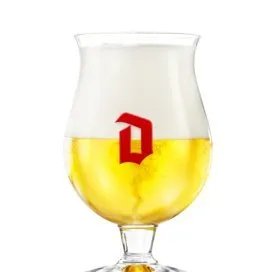
Duvel
Ownership: Listed on Euronext Brussels
Pricing: 33cl Duvel bottles ~€2.50-€4 at retail.
Known for: Brewed in Breendonk-Puurs by Duvel Moortgat (founded 1871, family-owned by the Moortgat family). Duvel Strong Golden Ale (8.5%) — bottle-conditioned, famously dry-finishing. Plus De Koninck, La Chouffe (Duvel-owned, originally Cazeau), Liefmans, Maredsous (brewed under licence). Belgium's most internationally recognised independent strong-ale brand. Family-controlled (Moortgat) and listed. Genuine alternative to AB InBev's portfolio in the Belgian premium-beer segment.
https://www.duvel.com

Tripel Karmeliet (Bosteels)
Ownership: acquired by AB InBev in 2016 (caveat)
Pricing: 33cl Karmeliet ~€3-€5 at retail.
Known for: Brewed by Brouwerij Bosteels in Buggenhout (founded 1791). Tripel Karmeliet (8.4%) is a three-grain Tripel using wheat, oats and barley — recipe attributed to 1679 Carmelite monks. Plus Pauwel Kwak (8%) and Deus Brut des Flandres. Bosteels was . Bosteels brewery itself is now AB InBev-owned, but the beers are unchanged — Karmeliet is still the three-grain Tripel that arguably out-Westmalles Westmalle. Honest sovereignty caveat: profits go to AB InBev.
https://bosteels.be
Cantillon (Lambic)
Ownership: family-owned (Van Roy family, 4th generation)
Pricing: 75cl bottles €15-€40 retail (when available). Some vintages much higher on secondary market.
Known for: Anderlecht, Brussels. Founded 1900, . Spontaneous-fermentation Lambic — wild yeasts from Brussels air, aged in oak. Gueuze (blended), Kriek (cherry), Rosé de Gambrinus (raspberry). Considered the world's reference Lambic brewer. Sold mostly on-site + a few specialist bars; not easy to find. The Lambic reference. Cantillon is a working museum as much as a brewery — the same Van Roy family, the same Anderlecht building, the same wild Brussels yeasts. Essential pilgrimage for serious beer travellers.
https://www.cantillon.be
Boon (Lambic)
Ownership: Family-owned
Pricing: 75cl Oude Geuze ~€15-€25. Mariage Parfait tier €25-€50.
Known for: Lembeek (south-west of Brussels, the original Lambic homeland). Brewery dates to 1680s; Frank Boon refounded it 1977. Spontaneous-fermentation Lambic. Boon Oude Geuze, Oude Kriek, Mariage Parfait series. The other reference Lambic producer after Cantillon — more accessible distribution, equally serious credentials. Mariage Parfait Oude Geuze is a hall-of-fame beer.
https://www.boon.be
Erdinger Weißbräu
Ownership: Privately held by the Brombach family (3rd generation). Erding (Bavaria), Germany since 1886.
Pricing: 0.5L bottles ~€1.50–€2.20 in German supermarkets; tap pours €3.50–€5
Founded: 1886; family-owned since 1949
Known for: Germany's largest dedicated wheat-beer brewery. Erdinger Weißbier is the world's biggest-selling Hefeweizen — and the brewery's strict 'Reinheitsgebot only' adherence plus family ownership make it the clean German wheat-beer choice.
https://www.erdinger.de
Paulaner
Ownership: Part of Brau Holding International (Schörghuber Group + Heineken — Heineken caveat). Munich since 1634 (originally Paulaner monastery brewery).
Pricing: 0.5L bottles ~€1.30–€2 in German supermarkets; tap pours €3.50–€5
Founded: 1634 — one of the six Munich Oktoberfest breweries
Known for: One of the six Oktoberfest breweries. Paulaner Salvator is the original double-bock recipe (1773), Paulaner Hefe-Weißbier is one of the world's best-known wheat beers. Heineken minority is the structural caveat; Bavarian heritage is real.
https://www.paulaner.com
You might also like
Vote: European chocolate brands
A guide to the most widely available European chocolate brands — who makes them, who owns them, and how they behave.
The Best Ketchup in Europe: Finding a Heinz Alternative
Names like Hellmann’s, Felix, and Stokes are gaining attention as serious contenders in the ketchup game.
12 European Travel Helpers: Explore Closer to Home
Here are some top platforms to make your European adventure smooth and fun