Europe’s Top Beer Brands: Proudly Brewed in Europe
Every great beer style was born somewhere in Europe: the pilsner in Plzeň, the Trappist ale in a Belgian abbey, the Weißbier in Bavaria, the dry stout in Dublin. Centuries of brewing, much of it invented one town or monastery at a time.
What's on this list isn't rare or cellared. It's the beer you can actually find — on tap and on the shelf, from Lisbon to Tallinn. All of it still brewed in Europe, by brewers who kept the ingredients, the jobs and the craft close to home.🍻
THE ORIGINALS - BEERS THAT CHANGED EVERYTHING
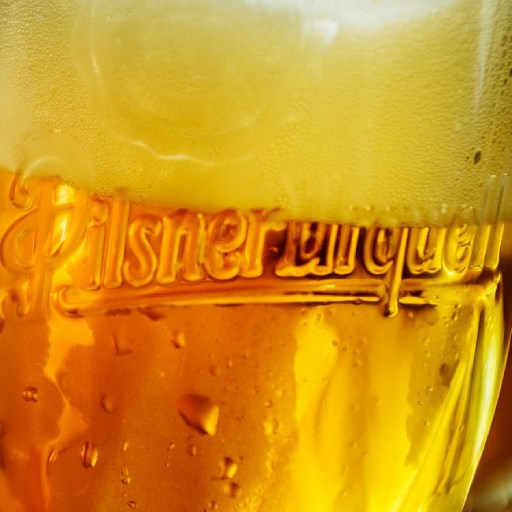
Pilsner Urquell
Ownership: Asahi Group (Japan) — brewed in Pilsen, Czechia
Known for: The original lager. Every pale, golden, bottom-fermented beer in the world traces its lineage to this brewery. Urquell means "original source."
History: On 5 October 1842, in the Bohemian city of Pilsen, a Bavarian brewer named Josef Groll produced the world's first clear, golden, bottom-fermented lager. Before this moment, all beer was dark. Pilsner Urquell didn't just launch a brand — it launched the most copied beer style in human history. Still brewed in the original Pilsen brewery, still using open fermenters and traditional underground lagering cellars.
>
Guinness
Ownership: Diageo plc (UK) — brewed at St. James's Gate, Dublin
Known for: The world's most iconic stout. The harp. The two-part pour. The pint that built a nation's global image.
History: Arthur Guinness signed a 9,000-year lease on St. James's Gate Brewery, Dublin, in 1759. By the 19th century it was the largest brewery in the world. Guinness dry Irish stout became inseparable from Irish identity, British pub culture, and post-colonial economies across West Africa. Few products in history have shaped a nation's global image as completely as Guinness shaped Ireland's.
>
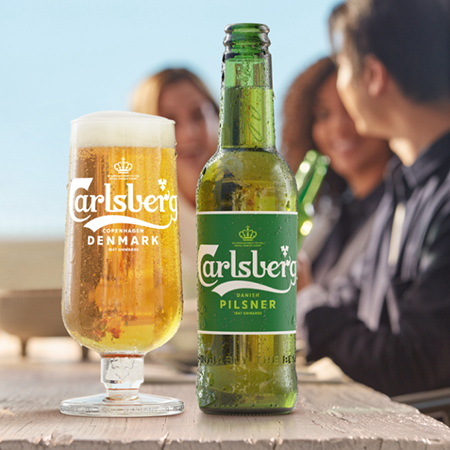
Carlsberg
Ownership: Carlsberg Foundation (Denmark) — European-headquartered, foundation-controlled
Known for: Danish lager and the Carlsberg Laboratory, which isolated pure yeast strains and helped establish the pH scale — discoveries that transformed brewing science worldwide.
History: Founded in 1847 by J.C. Jacobsen outside Copenhagen. The Carlsberg Laboratory, established 1875, is where Emil Chr. Hansen first isolated a single-strain lager yeast in 1883 — a discovery that eliminated batch-to-batch inconsistency and made modern industrial brewing possible. Carlsberg didn't just make beer; it made modern brewing science. Still headquartered in Copenhagen and controlled by the Carlsberg Foundation.
>
Heineken
Ownership: Heineken N.V. (Netherlands) — European-headquartered, family-influenced
Known for: The world's most internationally distributed European lager. The green bottle. The red star. 70+ countries.
History: Gerard Adriaan Heineken bought an Amsterdam brewery in 1864. When US Prohibition ended in 1933, Heineken was the first European beer to ship to America — and never looked back. Today Heineken N.V. remains headquartered in the Netherlands, with a portfolio spanning Amstel, Birra Moretti, Cruzcampo and Żywiec that maps the full range of Europe's beer cultures.
>
THE MONASTERY BEERS - EUROPE'S MOST EXTRAORDINARY BREWING TRADITION
Westvleteren (Trappist)
Ownership: Abbey of Saint Sixtus, West Flanders — monk-owned, never commercially sold
Known for: Repeatedly voted the best beer in the world. Available only by phoning the abbey and collecting in person. No label, no advertising, no compromise.
History: Brewed by the Trappist monks of Saint Sixtus since 1838. Westvleteren refused to industrialise, refused to licence, refused to grow — on monastic principle. You cannot buy it in a supermarket. You phone the abbey, book a time slot, drive to West Flanders, and collect it yourself. Production is capped because the monks brew only what they need to sustain their community. It is the ultimate anti-brand, and the most coveted beer in Europe.
>
Chimay (Trappist)
Ownership: Privately held
Pricing: 33cl bottles ~€3-€6 at retail. 75cl Blue ~€10-€18.
Known for: Notre-Dame de Scourmont Abbey, Hainaut. Trappist since 1862. Red (dubbel, 7%), White/Triple (8%), Blue (quadrupel, 9%), Gold (pale, 4.8%). Most widely distributed Trappist after Orval and the only one with a national supermarket presence. Plus Chimay cheese. The most accessible Trappist beer worldwide — Chimay's commercial reach is genuinely unusual for a Trappist house. Quality holds remarkably well at scale. The Blue is the desert-island Trappist pick.
https://chimay.com
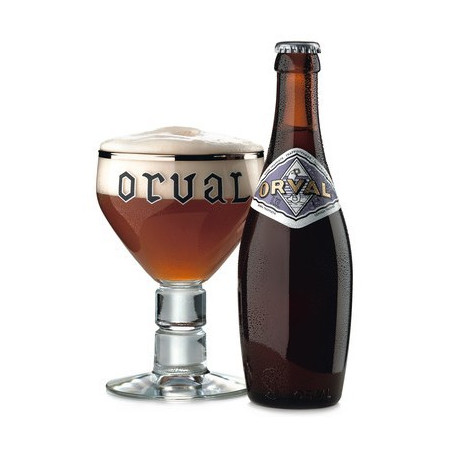
Orval (Trappist)
Ownership: Notre-Dame d'Orval Abbey, Gaume — monk-owned, Authentic Trappist Product
Known for: The most distinctive Trappist beer. One beer only. Dry-hopped with wild Brettanomyces — it changes character as it ages in the cellar. No other major brewery commits to that kind of built-in evolution.
History: The abbey dates to 1070; the current brewery opened in 1931. Orval produces exactly one beer — a pale ale dry-hopped with East Kent Goldings and refermented with wild Brettanomyces yeast. Drink it fresh and it is hoppy and bright. Cellar it for two years and it transforms into something drier, earthier and more complex. Single SKU, no line extensions, no compromise. One of the most intellectually interesting beers in Europe.
>
Rochefort (Trappist)
Ownership: Notre-Dame de Saint-Rémy Abbey, Namur — monk-owned, Authentic Trappist Product
Known for: The other answer to Westvleteren 12. Rochefort 10 (11.3% ABV) is ranked alongside it in blind tastings — and is far more obtainable.
History: Trappist brewing at Saint-Rémy since 1899. Three beers — Rochefort 6, 8 and 10 — named by density, not strength. The 10 is the one: dark fruit, chocolate, dates, a finish that goes on for minutes. Frequently ranked top-three in world beer rankings alongside Westvleteren 12. For anyone who wants that level of quality without phoning a Belgian abbey, Rochefort 10 is the answer.
>
Westmalle (Trappist)
Ownership: Abbey of Our Lady of the Sacred Heart, Antwerp — monk-owned, Authentic Trappist Product
Known for: The Trappist brewery that defined Belgian Tripel and Dubbel as styles. Westmalle Tripel (9.5%) is the recipe most Belgian Tripels were modelled on.
History: Trappist brewing at Westmalle since 1836. The monks here created the modern Tripel and Dubbel styles as we know them today — every Belgian Tripel you have ever drunk traces its DNA back to this abbey in Antwerp province. Their Extra (a lighter, pale ale) is produced only for the monks' own refectory and is almost impossible to obtain. Three beers, centuries of influence, zero compromise.
>
BRITISH ALES WIDELY AVAILABLE IN EUROPE
Fuller's London Pride
Ownership: Asahi Group Holdings (Japan) — founded 1845, Chiswick, London
Known for: England's most celebrated cask and bottled ale. A beautifully balanced best bitter with rich malt character, fruity hop aroma and a long, satisfying finish. Sold in pubs and supermarkets across the UK and exported throughout Europe.
History: Fuller, Smith & Turner has brewed on the banks of the Thames at Chiswick since 1845, making it one of England's oldest surviving breweries. London Pride — launched in the 1950s — became the flagship of a resurgent British ale scene, winning countless awards at CAMRA's Great British Beer Festival. Recognised as the benchmark of British bitter, it remains the top-selling cask ale in London pubs.
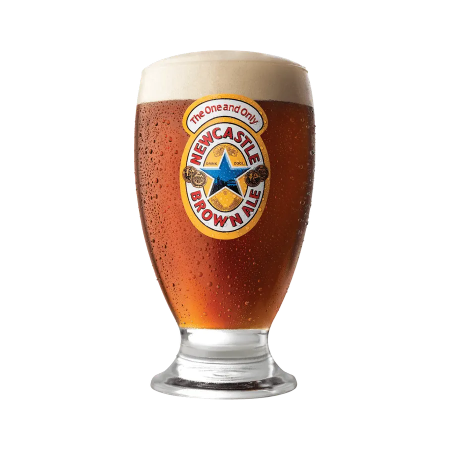
Newcastle Brown Ale
Ownership: Heineken International — founded 1927, Newcastle upon Tyne, England
Known for: One of England's most recognisable brown ales — smooth, lightly hopped and malty with a distinctive nutty flavour. Available on draught and in bottles at pubs and off-licences across the UK and exported worldwide.
History: First brewed in 1927 by James Porter & Sons at the Tyne Brewery in Newcastle, the beer became a working-class staple of the North East before going national. Its iconic blue star logo and blue-tinted bottle made it one of the most visually recognisable English ales. Now brewed under licence in various countries, it remains a proud symbol of North East England and one of the country's top ale exports.
THE GREAT INDEPENDENTS - EUROPEAN-OWNED, CENTURIES-DEEP
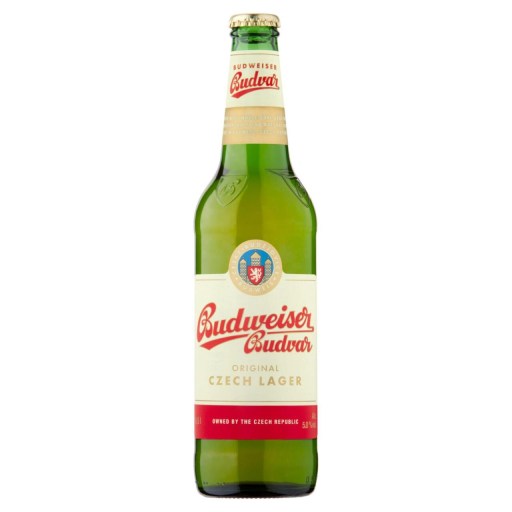
Budweiser Budvar
Ownership: Czech state — 100% publicly owned, Prague
Known for: The original Budweiser. A century-long trademark battle with Anheuser-Busch. Czech national brewing sovereignty.
History: Brewed in České Budějovice — Budweis in German — since 1895, in a city that had been called Budweiser for centuries before the American brand existed. Budvar has fought AB InBev in courts across the world over the Budweiser name and has largely won inside Europe. State-owned by the Czech Republic, it is one of the last major European breweries to have refused every acquisition offer. A genuinely political beer, in the best sense.
>
Augustiner-Bräu
Ownership: Edith-Haberland-Wagner Foundation (Munich) — independent, never advertises
Known for: Munich locals' favourite. The only major Oktoberfest brewery that has never run a national advertising campaign. If you ask a Bavarian which beer they actually prefer, most will say Augustiner.
History: Founded by Augustinian monks in Munich in 1328 — the city's oldest brewery still operating. Passed through monastic, royal and private hands before landing with a charitable foundation. Augustiner has never needed to advertise because its reputation in Bavaria is unassailable. Its Helles, served in stone tankards at the Augustiner-Keller beer garden, is the living definition of what Munich brewing is supposed to taste like.
>
Stiegl
Ownership: Kiener family (Salzburg) — private, independent since 1492
Known for: Austria's most beloved independent lager. Founded the same year Columbus reached the Americas. Over 530 years of unbroken brewing in Salzburg.
History: Founded in Salzburg in 1492 and remaining independent through the Habsburg Empire, two world wars and every wave of brewing consolidation since. The Goldbräu, its flagship lager, sits between a Munich Helles and a softer pilsner — unmistakably Austrian in character. The brewery is still in central Salzburg. In a continent where most historic breweries have been absorbed by multinationals, Stiegl's continued family independence is its own kind of extraordinary achievement.
>
Cantillon (Lambic)
Ownership: Van Roy family, 4th generation — Anderlecht, Brussels, founded 1900
Known for: The world's reference Lambic brewery. Wild spontaneous fermentation — Brussels air is literally an ingredient. The brewery is a working museum open to visitors.
History: Founded in Anderlecht in 1900 and still in the same building. Cantillon uses no cultivated yeast — beer ferments entirely from wild microorganisms in the Brussels air, a tradition unchanged for centuries. Cantillon Gueuze and Kriek represent one of Europe's most irreplaceable beer traditions, so tied to the geography of the Senne Valley that it cannot be authentically replicated anywhere else on earth. The Van Roy family have never been tempted to scale or sell.
>
Boon (Lambic)
Ownership: Family-owned — Lembeek (south-west Brussels), brewery founded 1680s, revived by Frank Boon in 1977
Known for: The other reference Lambic producer after Cantillon — more accessible distribution, equally serious credentials. Mariage Parfait Oude Geuze is a hall-of-fame beer.
History: Lembeek is in the heart of the original Lambic homeland, the Senne Valley south-west of Brussels. The brewery site dates to the 1680s; Frank Boon restored the tradition when he refounded it in 1977. Boon Oude Geuze and Oude Kriek are benchmarks of the style, and the Mariage Parfait series — a blend of the finest old Lambics — is among the most sought-after beers in Belgium. A more obtainable entry point into Lambic than Cantillon, without any compromise on authenticity.
>
Estrella Galicia
Ownership: Rivera family (A Coruña, Spain) — five generations, fully private
Known for: The credible Spanish lager. Family-owned for over a century while rivals were sold to multinationals. Formula 1 and MotoGP sponsor. A serious craft range alongside the mainstream pilsner.
History: Founded in A Coruña, Galicia in 1906 as Hijos de Rivera. While Mahou-San Miguel and Cruzcampo were absorbed into multinational portfolios, Estrella Galicia stayed in the Rivera family — now in its fifth generation. Its 1906 Reserva Especial is a genuinely respected craft lager; the flagship pilsner keeps its profits local. In Spain's consolidated beer market, independence this durable is a real achievement.
>
Bitburger
Ownership: Simon family (seventh generation) — Bitburg, Rhineland-Palatinate
Known for: Germany's leading pilsner brand by volume. "Bitte ein Bit" — the advertising tagline known to every German over 40. Drier and crisper than Czech-style pilsners.
History: Founded in Bitburg in 1817, family-owned through seven generations of the Simon family without interruption. Bitburger became synonymous with German pilsner culture through decades of consistent quality and one of the most effective beer advertising campaigns in European history. Remaining family-owned at this scale, competing directly with multinational brands, makes it one of Germany's most impressive independent brewing success stories.
>
Tegernseer
Ownership: Wittelsbach family — descendants of the former Bavarian royal house
Known for: Royal-family-owned Bavarian abbey lager. Cult status among connoisseurs. The Bräustüberl on Lake Tegernsee is one of Europe's great beer garden experiences.
History: The brewery dates to 1675 in the old monastery building at Tegernsee in the Bavarian Alps. When the monastery was secularised in the Napoleonic era, the Wittelsbach royal family — the former kings of Bavaria — acquired it and have owned it ever since. The Helles is genuinely exceptional and has achieved cult status among serious Bavarian lager drinkers. One of very few breweries in Europe still owned by a former royal house.
>
Erdinger Weißbräu
Ownership: Brombach family (3rd generation) — Erding, Bavaria, founded 1886
Known for: Germany's largest dedicated wheat-beer brewery and the world's biggest-selling Hefeweizen. Family-owned, Reinheitsgebot-compliant, and the clean choice for German wheat beer.
History: Founded in Erding, Bavaria in 1886; family-owned since 1949. Erdinger became the world's largest wheat-beer specialist by doing one thing exceptionally well — a traditional, naturally cloudy Bavarian Hefeweizen brewed strictly to the Reinheitsgebot. The family has resisted the temptation to diversify away from wheat beer or sell to a conglomerate. A model of focused, independent German brewing at scale.
>
Paulaner
Ownership: Brau Holding International (Schörghuber Group + Heineken minority stake) — Munich, founded 1634
Known for: One of the six official Munich Oktoberfest breweries. Inventor of Salvator, the original Doppelbock — the monk's "liquid bread" for Lenten fasting.
History: Founded by Paulaner monks in Munich in 1634. The monks brewed a strong dark Doppelbock they called Salvator ("Saviour") to sustain them through Lenten fasting — liquid bread. It became the template for all Doppelbock beers that followed. Paulaner is one of six breweries legally permitted to pour at Munich's Oktoberfest, a right tied to centuries of Bavarian brewing law. Heineken holds a minority stake, which is worth noting, but the Bavarian heritage and Munich brewing identity remain real.
>
Mack Bryggeri
Ownership: Mack family (4th generation) — Tromsø, Norway, founded 1877
Known for: The world's northernmost brewery (69°N, inside the Arctic Circle). Independent and family-owned, brewing in one of the most extraordinary locations of any brewery in Europe.
History: Founded in Tromsø in 1877 by Ludwig Mack, an immigrant brewer from southern Germany who brought lager technique to the Norwegian Arctic. The brewery has been in the Mack family ever since. Mack Pilsner and the Nordlys (Northern Lights) lager are the flagship beers — brewed under the midnight sun and the northern lights, remaining fiercely independent while most Norwegian beer brands have been absorbed by Carlsberg. Worth choosing over Ringnes and other Carlsberg-owned Norwegian brands for exactly that reason.
>
THE REVOLUTIONARIES - SMALL BREWERIES CHANGING EUROPEAN BEER NOW
Bernard
Ownership: Family-owned by Stanínislav Bernard since 1991 — privatised from communist state ownership
Known for: The independent Czech lager that didn't sell out. Brewed without pasteurisation. Cult status among Czech beer drinkers who think Pilsner Urquell has gone too commercial.
History: Based in Humpolec, central Bohemia. Bernard was privatised after the fall of communism and has stayed in the Bernard family ever since, resisting acquisition offers. It brews traditionally, without pasteurisation, giving the beer a flavour that larger commercial lagers have engineered out of existence. Its non-alcoholic Free is one of the best alcohol-free lagers in Europe. A brewery that chose craft credibility over scale.
>
Mikkeller
Ownership: Mikkel Borg Bjørgsø (founder) — Copenhagen, founded 2006
Known for: The brewery that has no brewery. Invented the modern gypsy-brewing model. Put Scandinavian craft beer on the global map and built a worldwide bar network without ever owning a fermentation tank.
History: Mikkel Borg Bjørgsø was a Copenhagen schoolteacher and homebrewer who began contracting other breweries to produce his recipes in 2006. He built a worldwide brand — bars in Copenhagen, San Francisco, Bangkok, Tokyo — without owning a single production facility. Mikkeller proved that brewing expertise and brand identity could be completely separated from physical infrastructure, inspiring a generation of European contract brewers and reshaping what craft beer branding could look like.
>
Birrificio Italiano
Ownership: Agostino Arioli (founder) — Limido Comasco, Lombardy, founded 1996
Known for: Inventing the Italian Pilsner. Tipopils (1996) created a sub-style now copied in craft bars from Brooklyn to Tokyo. The original is still the reference.
History: When Agostino Arioli opened Birrificio Italiano in 1996, Italy was not a beer country. His Tipopils — a dry-hopped, highly carbonated, crisp pilsner with more bitterness and aroma than its German or Czech cousins — defined what became known as the Italian Pilsner style, one of the most influential brewing categories of the 21st century. A single brewery in Lombardy changed how the world thinks about pilsner.
>
Põhjala
Ownership: Privately held — Tallinn, Estonia, founded 2011
Known for: Estonia's most internationally recognised craft brewery. World-class imperial stouts and Baltic porters from one of Europe's newest beer cultures. Öö (imperial stout, 10.5%) is a benchmark of the style globally.
History: Founded in Tallinn in 2011 in a country with almost no craft brewing tradition. Within a decade, Põhjala's Öö and its Cellar Series limited releases were appearing on international best-beer lists alongside breweries a century older. In a market dominated by foreign-owned Estonian lager brands — Saku owned by Carlsberg, A. Le Coq by Olvi — Põhjala is the independent, locally-rooted answer. A sign of how fast a new European beer culture can be built from scratch.
>
Lost and Grounded
Ownership: Alex Troncoso and Annie Clements (founders) — Bristol, UK, founded 2016
Known for: The best German-style lagers being made outside Germany. Decoction mashing, proper cold conditioning, zero shortcuts. Their Keller Pils has been seriously compared to Munich originals.
History: Alex Troncoso, former head brewer at Camden Town Brewery, and Annie Clements founded Lost and Grounded in Bristol with one specific ambition: to brew traditional Bavarian lager styles — Helles, Keller Pils, Hefeweizen — with full German method in a British independent brewery. No shortcuts, no cutting cold-conditioning time, no adjuncts. At a time when "craft lager" often means neither craft nor lager, Lost and Grounded is the real thing.
>
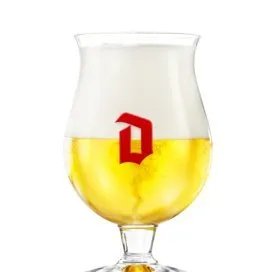
Duvel
Ownership: Duvel Moortgat (family-controlled, listed on Euronext Brussels) — Breendonk-Puurs, Belgium
Known for: Belgium's most internationally recognised independent strong golden ale. Bottle-conditioned, dangerously drinkable at 8.5%, famously dry-finishing. The name means "devil" in Flemish dialect.
History: Brewed by the Moortgat family since 1871. The original Duvel was a dark ale; the golden strong version we know today was developed after World War II and launched in 1970. Duvel Moortgat has since acquired De Koninck, La Chouffe and Liefmans, making it Belgium's most significant independent brewing group — and a genuine counterweight to AB InBev's dominance of the Belgian premium beer segment.
>
You might also like
Vote: European chocolate brands
A guide to the most widely available European chocolate brands — who makes them, who owns them, and how they behave.
The Best Ketchup in Europe: Finding a Heinz Alternative
Names like Hellmann’s, Felix, and Stokes are gaining attention as serious contenders in the ketchup game.
12 European Travel Helpers: Explore Closer to Home
Here are some top platforms to make your European adventure smooth and fun