European Antivirus Software: The Best Alternatives
 Euronomy Team
For most people, the antivirus you already have is fine. Windows Defender is now genuinely capable, and phones protect themselves. So the question isn't "do I need antivirus?" but "whose do I trust?" Once a company has that much access to your device and traffic, what matters is who they are and which government can compel their data.
That's why the scene is political. Kaspersky got banned in the US and warned against across Europe, not over a proven backdoor, but because a Russian-jurisdiction company can be compelled. And Avast and AVG only feel like scrappy Czech alternatives: both now sit inside US-listed Gen Digital, alongside Norton and Avira.
Bottom line: antivirus isn't something you need anymore. Now it's something you choose. The most important spec isn't the detection rate, it's the flag on the company that wrote it.
ESET
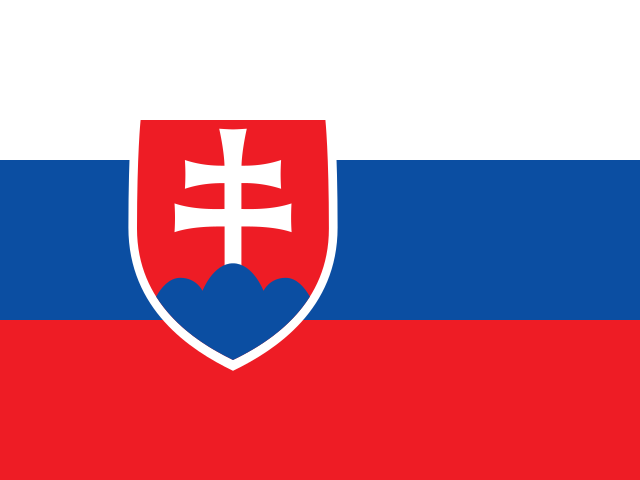
Known for: lightweight scanner, low system impact, deep enterprise endpoint (EDR/XDR) presence
Pricing: tiered (HOME Essential / Premium / Ultimate), priced per device count; Essential ~$45–70/yr for a few devices
Bitdefender

Known for: best-in-class detection scores, the OEM engine behind many other AV brands
Pricing: Total Security ~$20 first year (3–5 devices), renews ~$90/yr
G DATA

Known for: strict German privacy positioning, dual-engine scanning, BankGuard
Pricing: Total Security ~€50/yr (1 device), ~€66 (3), ~€82 (5)
Made in: Germany
F-Secure

Known for: clean UX, honest flat renewal pricing, strong banking/VPN bundle (consumer); WithSecure for cloud/enterprise
Pricing: F-Secure Total ~€70/yr (1 device), ~€90 (3), ~€100 (5)
Made in: Finland